5 lessons we learned from sending more than one million cold emails in 2025
In 2025, we sent more than one million cold emails across different industries, regions, and sales motions. Not as one-off campaigns, but as part of structured outbound systems built for B2B companies.
Sending at that volume forces clarity. Patterns become visible quickly. Assumptions get challenged. Some best practices hold up. Others fall apart.
Here are the five most important lessons we learned.
1. A generic but relevant email often works better than a personalized but irrelevant one
Personalization is often misunderstood.
Many teams focus on surface level personalization. First name. Company name. A random LinkedIn reference. If the message itself is not relevant to the buyer’s situation, personalization does not save it.
We consistently saw better results from emails that were generic in wording but highly relevant in context. Clear industry fit. Clear role fit. Clear problem fit.
Relevance beats personalization every time.
2. Do not try to sell in a cold email
Cold email is not the place to pitch your product.
The goal is not to close a deal. The goal is to connect the right salesperson to the right prospect.
Emails that tried to explain too much or push a solution too early performed worse. Short emails that invited a conversation performed better.
Think of cold email as an introduction, not a presentation.
3. Subject lines need to be short and sound internal
Long subject lines rarely win.
The best performing subject lines were short and felt like internal communication. They looked like something a colleague or partner might send.
Examples include simple phrases, questions, or neutral statements. Not marketing language. Not clever hooks.
If a subject line looks like it came from a campaign, it usually gets ignored.
4. Never start before you define your TAM and ICP
This is where most outbound fails before it even starts.
If your Total Addressable Market and Ideal Customer Profile are not clearly defined, everything that follows becomes guesswork. Lists get noisy. Messaging gets vague. Results become inconsistent.
The best performing campaigns always started with clear targeting rules. Industry. Company size. Buyer roles. Buying context.
Outbound only scales when targeting is precise.
5. Testing always beats assuming
What works for one audience often fails for another.
We tested subject lines, opening lines, call to action styles, follow up timing, and segmentation logic continuously. Assumptions were wrong more often than they were right.
The teams that treated outbound as a testing system instead of a fixed playbook consistently outperformed those who relied on best practices alone.
Outbound is not about being right. It is about learning faster.
Final thought
Sending more than one million cold emails reinforced one core idea. Outbound is not about volume. It is about structure, relevance, and discipline.
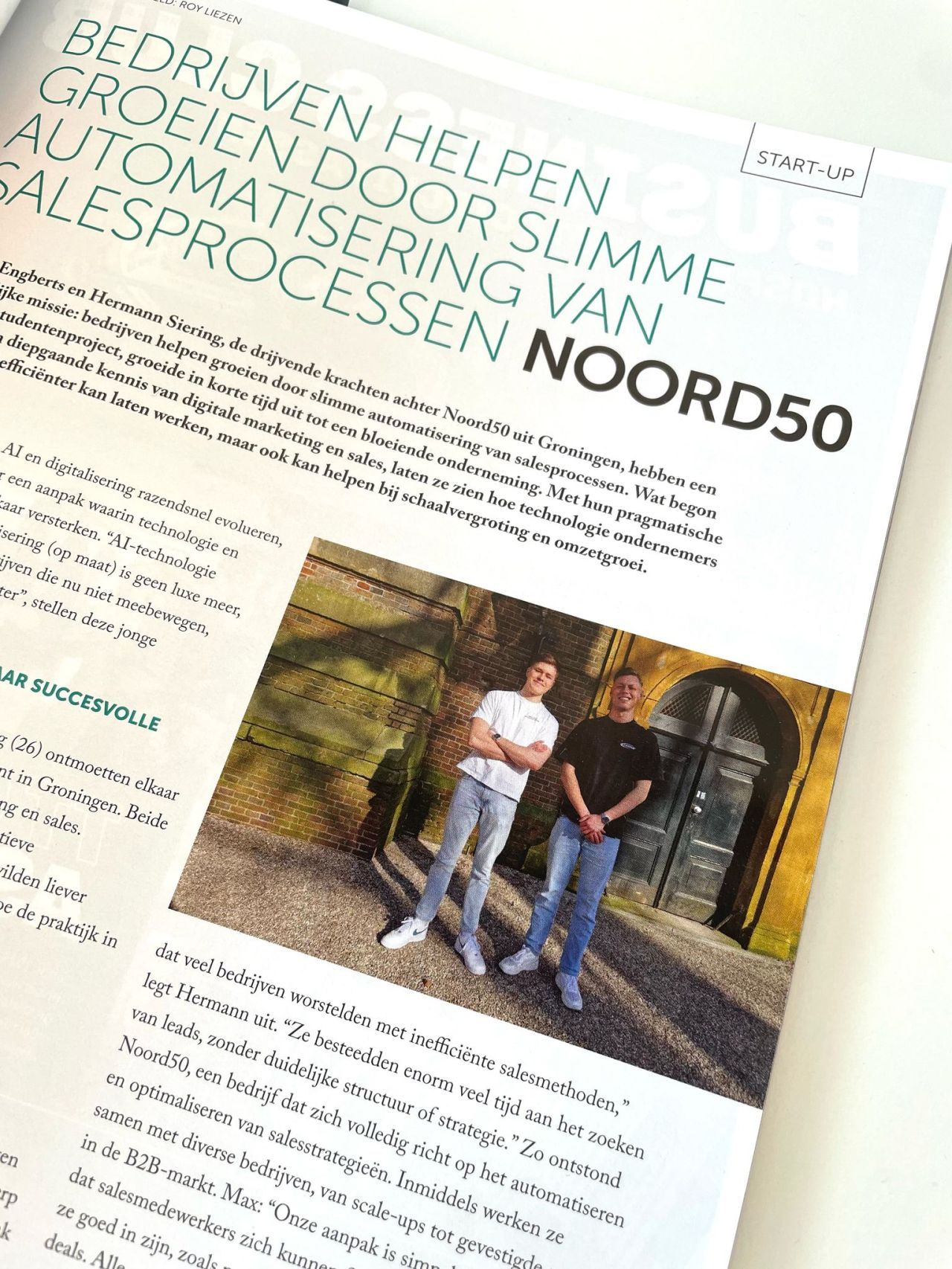
At Noord50, we build outbound systems where these lessons are built into the process from day one. Not as tips, but as rules.
If your outbound feels unpredictable, the issue is rarely copy alone. It is almost always the system behind it.
" height="9.0156px" id="LIcbdboyB" transform="translate(4.987 4.5)" width="9.01562px"/></svg>)